



When analyzing a company, you probably focus on revenue growth, profit margins, cash flow, and valuation. And for good reason. But one important factor is often overlooked: management.
The people leading a company set its strategy, decide where to invest its capital, build its culture, and make important decisions about its future. Great management can turn a good business into an exceptional one. Poor management can hold a company back, even if it has strong competitive advantages.
Management quality is much harder to measure than financial performance. So how can you recognize exceptional management?
In this article, you’ll learn:
🎯 Why management is crucial to long-term success
🧠 What separates average from exceptional management
🔍 How to evaluate management quality
🏆 Examples of exceptional leadership in practice
📊 Plus, our exclusive Management Quality Scorecard to help you assess management quality
🎯 Why Management Matters
A company can have great products, a strong market position, and plenty of opportunities to grow. But without the right people making the decisions, even the most promising businesses can struggle.
Management plays a crucial role in a company’s long-term success. The decisions made today can influence its performance for years or even decades. Where should the company invest? Which markets should it enter? Should it focus on growth, improve profitability, or return money to shareholders?
These decisions affect how a business grows, how it competes, and how much value it creates over time. Good management can also drive innovation, helping companies develop new products and stay ahead of competitors. Strong leadership is important during difficult times, such as economic downturns, growing competition, or major changes in technology. And research shows just how big the difference can be.
A February 2026 study by Bain & Company found that founder-led companies in the S&P 500 delivered 2.1x the total shareholder returns of companies without founder leadership since 2015. For technology companies, the difference was even bigger at 2.6x. Even without the technology sector, founder-led companies delivered 1.4x the total shareholder returns of their peers.
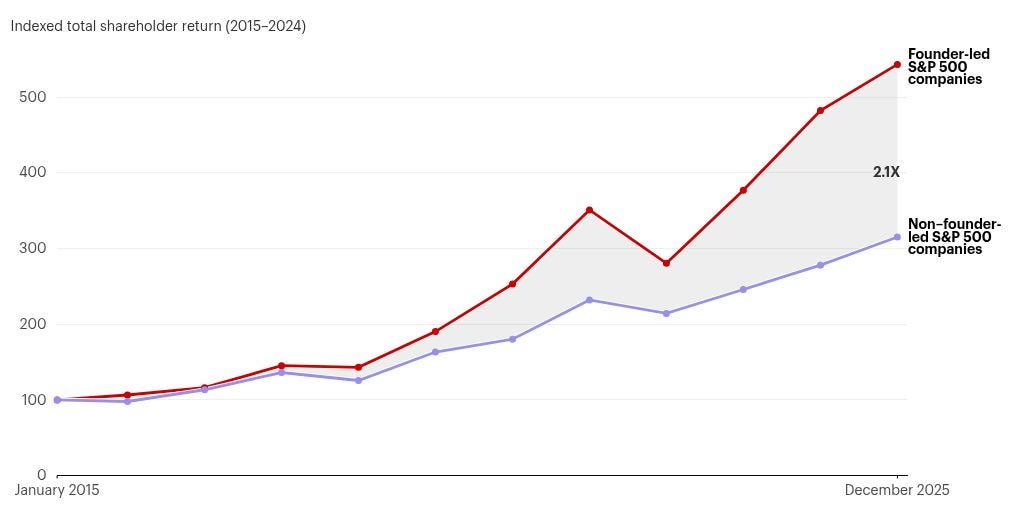
Source: Bain & Company (2026), The Magic of Founder-led Companies.
Of course, being founder-led doesn’t automatically mean a company has exceptional management. The research shows a historical relationship, not proof that founder leadership alone explains the higher returns. Strong financial results can also come from favorable market conditions or competitive advantages built years ago. And great leaders don’t always have to be founders.
That’s why you should look beyond financial performance and understand who is leading the company, how they make decisions, and what they’ve achieved over time.
🧠 Average vs. Exceptional Management
Not all management teams are equally good. Some focus on meeting short-term goals and keeping the business running. Others think years ahead, make bold decisions, and build companies that can grow for decades.
But what separates average management from exceptional management?
We believe there are five key qualities you should look for:
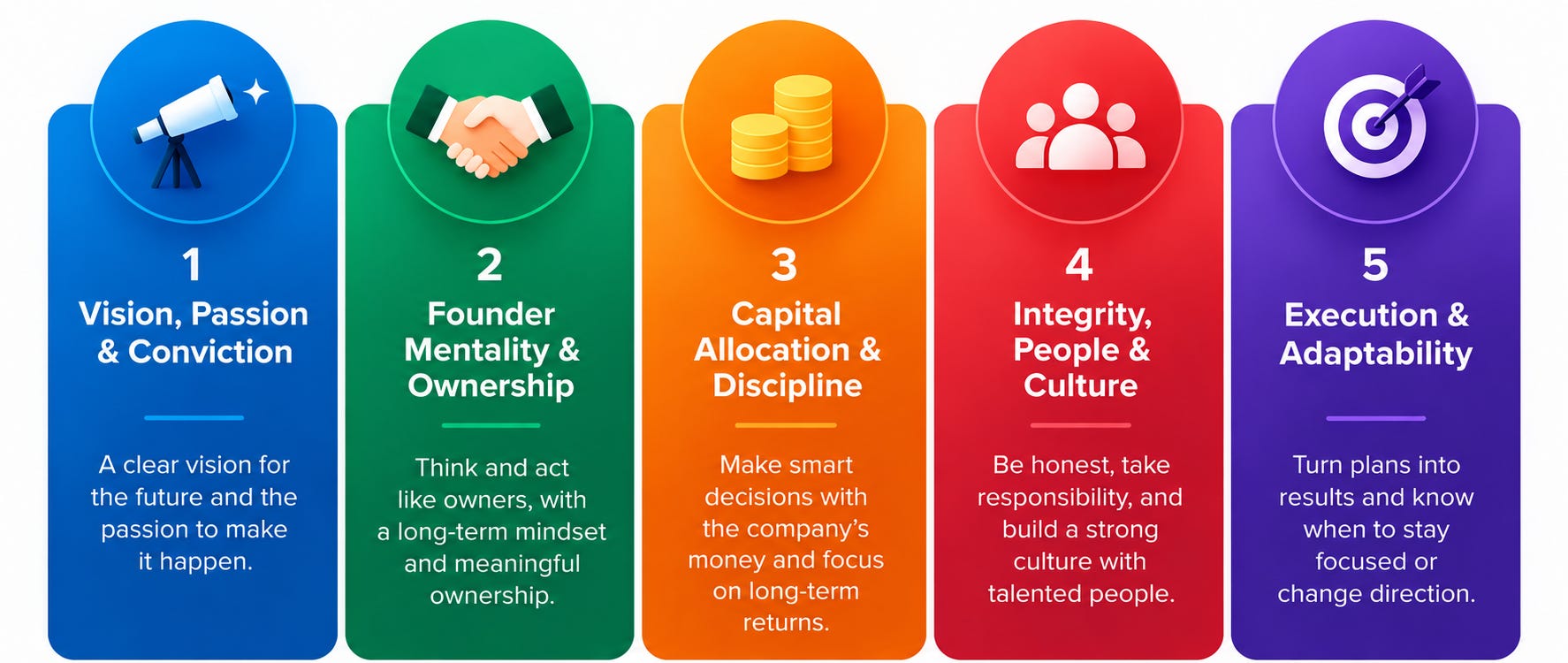
Source: The Future Investors — The 5 Key Pillars of Exceptional Management
🔭 1. Vision, Passion & Conviction
Exceptional leaders have a clear vision for the future. They know where they want to take the company and are passionate about making it happen. They don’t simply follow industry trends. They think ahead, see opportunities early, and are willing to make difficult decisions, even when others disagree. But having a vision isn’t enough. Great leaders turn their vision into action and stay focused on their long-term goals.
🤝 2. Founder Mentality & Ownership
Some of the best leaders think and act like owners, not just employees. This is often seen in founder-led companies, where the people running the business have a personal connection to what they’ve built. They care deeply about the business, take responsibility for its success, and make decisions with the company’s long-term future in mind. This mindset is often called a founder mentality. But it isn’t limited to founders. CEOs who didn’t start the company can have the same mindset.
Ownership also matters. When leaders own a meaningful number of shares in the company, their financial interests are more closely connected to those of shareholders. But too much control can also be a risk if nobody is there to challenge their decisions.
💰 3. Capital Allocation & Discipline
One of management’s most important jobs is deciding how to use the company’s money. Should the company invest in new products, expand into new markets, buy another business, buy back shares, or pay dividends?
Exceptional leaders understand that not every opportunity is a good investment. They invest where they expect the best long-term returns and avoid spending money just to make the company bigger. Great capital allocation can create value for shareholders for many years. Poor decisions, such as expensive acquisitions that don’t deliver results, can destroy that value.
❤️ 4. Integrity, People & Culture
Great management isn't just about strategy and financial results. It's also about honesty, trust, and building a strong company culture. Exceptional leaders communicate openly with shareholders, take responsibility when things go wrong, and give credit to their teams when things go right.
They also know that a company’s success depends on its people. Hiring talented employees, keeping them motivated, and creating a culture where new ideas are welcome can make a big difference over time. How leaders treat their employees and shareholders says a lot about the kind of company they’re building.
🎯 5. Execution & Adaptability
A great strategy means little if management can’t execute it. Exceptional leaders turn ambitious plans into real progress. A strong track record also matters. Great leaders have shown over time that they can deliver results, make good decisions, and guide companies through difficult periods. They set clear goals, keep their promises, and show consistent progress over time. But even the best plans sometimes need to change. New competitors, technologies, and customer needs can quickly change an industry.
Strong leaders recognize when something isn’t working. They admit mistakes, learn from them, and are willing to change direction when needed. The best management teams know when to stay focused and when to adapt.
These five qualities often work together. A leader can have a great vision but struggle to deliver results. Another may deliver strong results but make poor decisions about how to invest the company’s money.
Exceptional management isn't about being perfect in every area. It's about consistently making good decisions that help the business grow and create long-term value.
🔍 How to Evaluate Management Quality
Now that we know what makes management exceptional, the next question is: How can you recognize great leadership?
Unlike revenue growth or profit margins, management quality is difficult to measure. But there are several ways to learn more about the people running a company.
Here are five practical ways to evaluate management quality: