


Welcome to the 16th edition of Unpacked, our monthly series where we take a deep dive into a company. This time, we’re taking a closer look at Bloom Energy — a leader in onsite power generation, delivering clean, reliable, and scalable power to multiple industries, with growing demand from AI data centers.
We break down its story, business model, and highlight the latest developments.
Additionally, we do a detailed fundamental analysis, diving into the company’s management, market, financials, and growth estimates. We score each area separately, leading to a final score between 0 and 100. This score reflects how fundamentally attractive we believe the company is as an investment, ranging from:
🔴 Below 50 → Uninvestable
🟠 50 - 59 → Questionable
🟡 60 - 69 → Reasonable
🟢 70 - 79 → Quality
🔵 80 - 89 → High-Quality
🟣 90 or above → Exceptional
The goal? To give you a full deep dive into this company, as a complement to your own research, so you can decide if it’s the right investment for you.
Now let’s unpack the fundamentals of Bloom Energy and see how we score it!
History and Business Model
Bloom Energy was founded in 2001 by KR Sridhar and a team of engineers, originally under the name Ion America.
The story behind Bloom started even earlier. Before founding the company, Sridhar led a team working on technology for NASA’s Mars program. The goal was to build a system that could use resources on Mars to produce oxygen and fuel for astronauts.
When NASA changed its plans for the Mars program, Sridhar and his team discovered that the technology could also be used in another way: to produce electricity on Earth.
This became the foundation for the Bloom Energy Server, which uses solid oxide fuel cells (SOFC) to turn fuels such as natural gas or biogas into electricity. The idea was simple: businesses could produce reliable power directly at their own location, instead of getting all their electricity from the power grid.
In 2006, Bloom started its first field test at the University of Tennessee. Two years later, the company commercially launched the Bloom Energy Server. Early customers included Google, Walmart, Coca-Cola, FedEx, and Bank of America.
In 2010, Bloom officially introduced the Bloom Energy Server to the public at a major event in California. The technology, often called the “Bloom Box” at the time, received widespread attention and put Bloom Energy on the map.
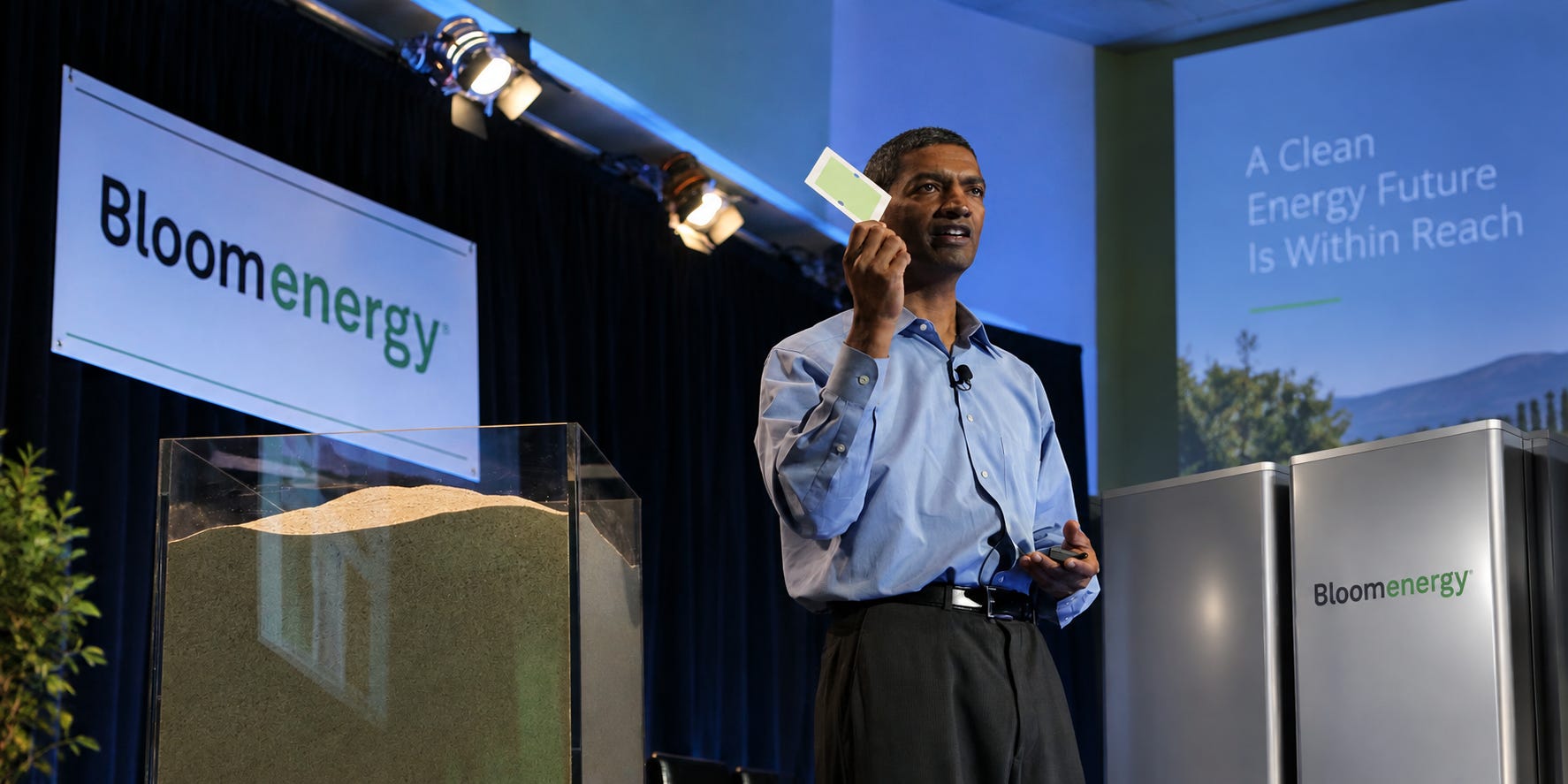
Source: Bloom Energy — KR Sridhar at the Bloom Energy Server launch, 2010
Bloom continued to grow. In 2011, it completed its first microgrid, and in 2013, the company entered Japan and started supplying power to data centers.
In 2018, Bloom Energy went public on the New York Stock Exchange under the ticker BE. In the years that followed, the company increased production and expanded into new markets, including South Korea.
More recently, data centers and AI infrastructure have become a major growth opportunity for Bloom. AI data centers need huge amounts of reliable electricity, but getting enough power from the grid can take years. Bloom can solve part of this problem by producing electricity directly at the data center, with systems that can be installed much faster.
Today, Bloom has grown from technology originally developed for Mars into a major provider of onsite power for data centers, manufacturers, utilities, and other energy-intensive businesses.
Its mission is:
“to make clean, reliable energy affordable for everyone in the world.”
Business Model Explained
Bloom Energy helps companies generate reliable electricity directly at their own location. This is especially useful for businesses that need a lot of power, such as data centers, factories, and utilities.
At the center of Bloom’s business are two technologies:
⚡ 1. Energy Server
The Energy Server is Bloom’s core product. It uses solid oxide fuel cells to turn natural gas, biogas, or hydrogen into electricity without combustion. The systems are installed directly at or near the customer’s location and can be expanded when more power is needed.
💧 2. Electrolyzer
The Bloom Electrolyzer uses the same core technology in reverse to produce hydrogen from water and electricity. The hydrogen can then be used for energy, industrial processes, or as a cleaner fuel.
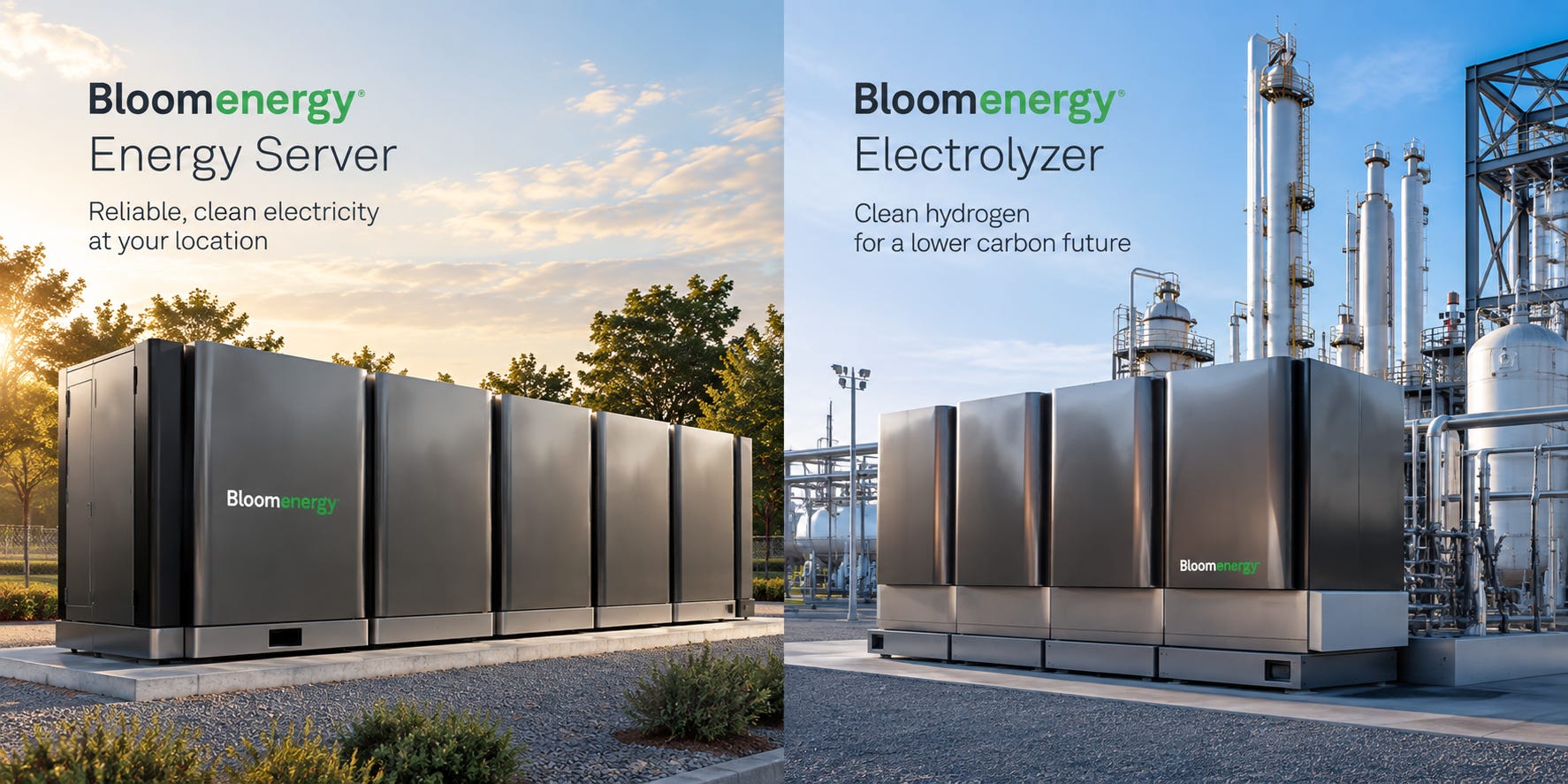
Source: Bloom Energy — Energy Server (left) and Electrolyzer (right) / AI-generated
How Bloom Energy Makes Money 💰
Bloom earns its revenue from:
⚡ Sales of Energy Servers and Electrolyzers
🏗️ Installation of its systems
🔧 Service and maintenance
🔌 Selling electricity through energy agreements
Bloom sells and installs its systems, then continues to earn revenue through service, electricity agreements, and customers adding more power capacity over time.
Revenue Breakdown
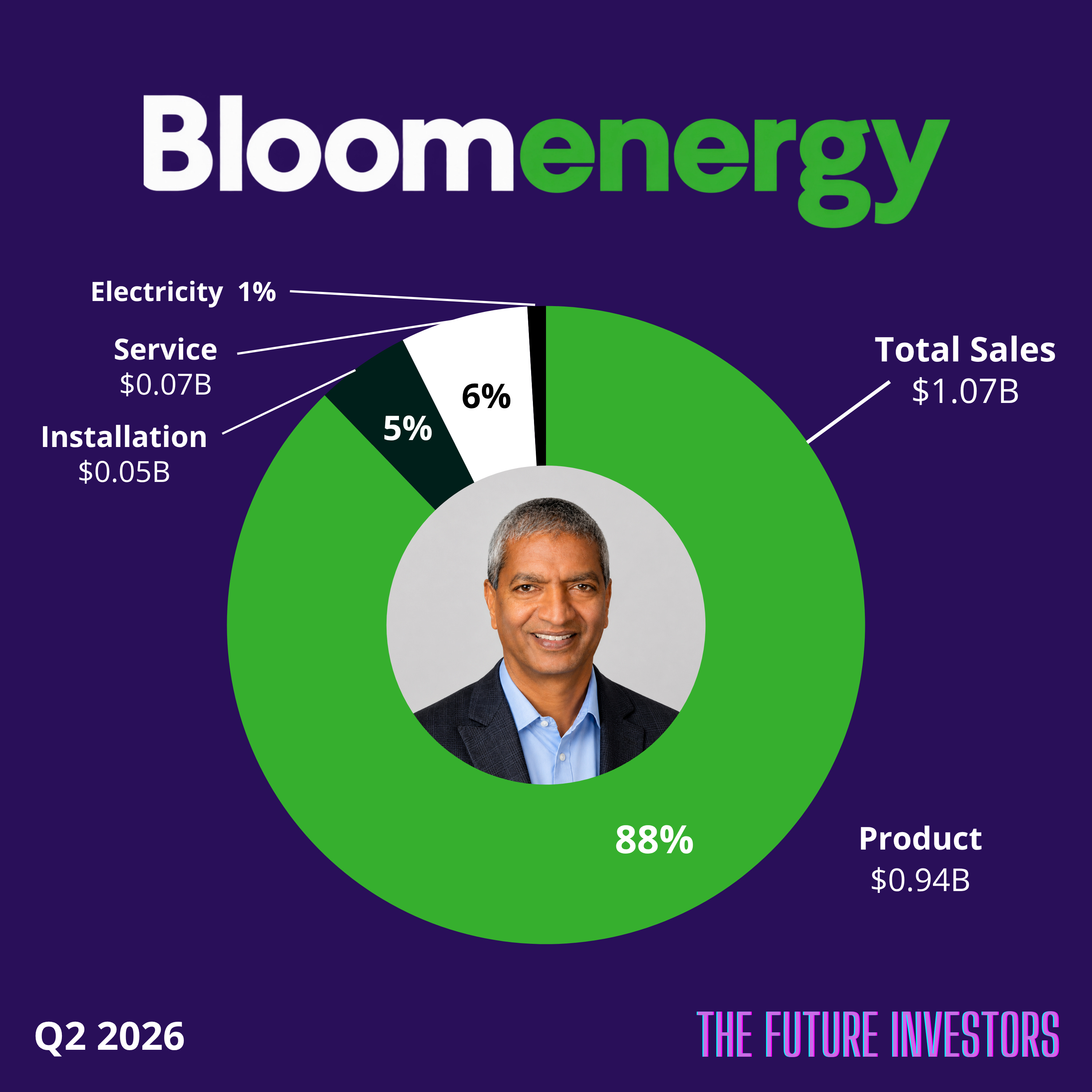
On July 28, 2026, Bloom Energy reported its Q2 2026 results. Total revenue reached a record $1.07 billion (+166% YoY), passing $1 billion in quarterly revenue for the first time.
⚡ Product – $935 million (88%)
Bloom’s largest source of revenue, coming from sales of its Energy Servers and Electrolyzers. Product revenue increased 215% YoY.
🏗️ Installation – $51 million (5%)
Revenue from installing Bloom’s systems at customer locations. Installation revenue increased 36% YoY.
🔧 Service – $69 million (6%)
Revenue from servicing and maintaining Bloom systems after they are installed. Service revenue increased 27% YoY.
🔌 Electricity – $10 million (1%)
Revenue from electricity generated by Bloom systems and sold directly to customers under energy agreements.
The revenue mix shows that Bloom is very dependent on product sales, with around 88% of Q2 revenue coming from products. As Bloom sells more systems, it can also earn more from installation, service, and electricity sales.
Recent Developments
Bloom Energy has entered an important new phase. AI and data centers have become a much bigger part of the business, with major partnerships, more customers, faster installations, and new leadership.
Here are the key developments:
1️⃣ Major AI Partnership with Oracle
In July 2025, Bloom announced a partnership with Oracle to power selected Oracle data centers in the U.S. The first project was completed in just 55 days, showing how quickly Bloom can bring new power online. In April 2026, the partnership became much larger. Oracle agreed to buy up to 2.8 GW of Bloom fuel cell systems, with the first 1.2 GW already contracted and being installed across Oracle projects in the U.S.
2️⃣ Brookfield Partnership Grows to $25 Billion
In October 2025, Bloom announced a $5 billion partnership with Brookfield to build and finance power projects for AI data centers. In June 2026, the partnership was expanded from $5 billion to $25 billion. The money can be used to finance Bloom-powered AI infrastructure projects around the world.
3️⃣ Growing AI & Data Center Business
AI and data centers have become an important market for Bloom. The company now works with nearly two dozen AI infrastructure customers, with around 250 MW of capacity, up from almost zero in this market two years ago. Bloom has already installed hundreds of megawatts of power at data centers. The company also says its technology has been approved by all major U.S. hyperscalers and more than a dozen neoclouds, AI labs, and data center operators. Customers and partners include Oracle, Equinix, CoreWeave, Brookfield, AEP, and MiTAC.
4️⃣ Large Backlog Supports Future Growth
At the end of 2025, Bloom reported around $20 billion in total backlog, including approximately $6 billion in product backlog, which was about 2.5x higher YoY. Since then, demand has continued to grow, supported by major AI and data center projects.
5️⃣ New Leadership
Bloom has also added several new leaders. In 2026, Simon Edwards became CFO. He previously served as CEO and CFO of AI chip company Groq and held senior finance roles at several technology companies. In 2025, Bloom also hired Aaron Hoover to lead business and corporate development and added former SAP co-CEO Jim Snabe to its Board of Directors.
6️⃣ Power Connect Makes Installations Faster
In August 2026, Bloom introduced Power Connect, a new system designed to make Energy Server installations faster. More of the electrical work is completed and tested in the factory before the equipment arrives at the customer. Bloom says this can reduce onsite installation time by more than 40%.
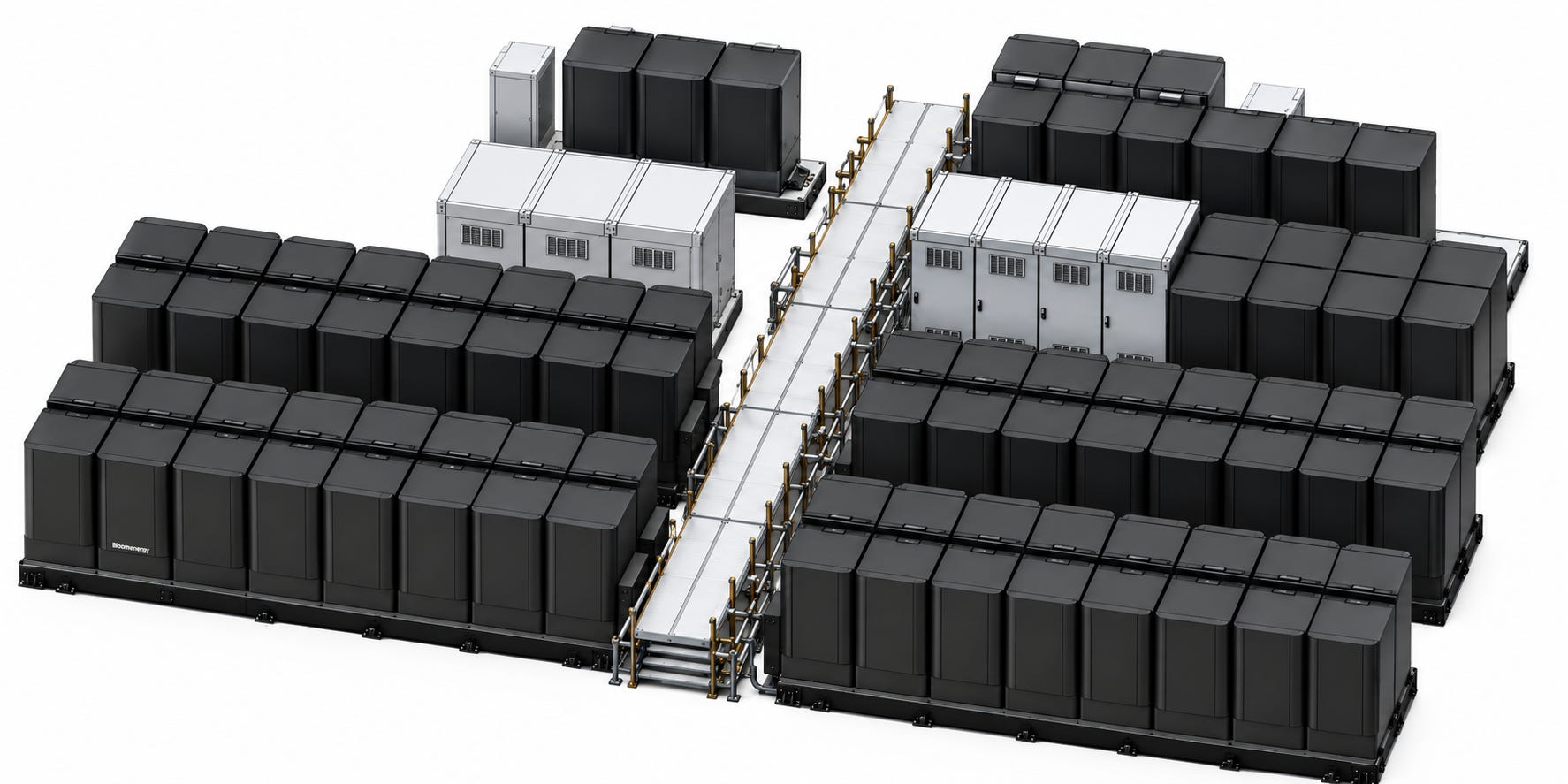
Source: Bloom Energy — Power Connect
7️⃣ Bloom Energy Joins the S&P 500
On September 4, 2026, it was announced that Bloom Energy will join the S&P 500. The change will take effect before the market opens on September 21, 2026. Bloom will replace Molson Coors Beverage in the index, marking another important milestone for the company.
🔥 Upgrade Now and Save 30%!
Get instant access to this Bloom Energy Full Deep Dive, all other 15 Deep Dives, our Portfolios & Transactions, our monthly Best Buys, 95+ Stock Battles — plus 420+ premium articles!
✅ Trusted by 4,800+ investors.
Fundamental Analysis
Now it’s time for the fundamental analysis of Bloom Energy.
In this section, we evaluate three key areas: management, market, and financials & growth estimates. Each area contains multiple elements and each element is scored individually, leading to a final score between 0 and 100.
Final Scoring
This score reflects how fundamentally attractive we believe Bloom Energy is as an investment, ranging from:
🔴 Below 50 → Uninvestable
🟠 50 - 59 → Questionable
🟡 60 - 69 → Reasonable
🟢 70 - 79 → Quality
🔵 80 - 89 → High-Quality
🟣 90 or above → Exceptional
Unlock our scoring framework and full fundamental analysis below, and see how we score Bloom Energy on a scale from 0 to 100 — exclusively available to our paid members! ✨
First, let’s walk through our scoring framework 📊👇