


Welcome to the 17th edition of Unpacked, our monthly series where we take a deep dive into a company. This time, we’re taking a closer look at Booking Holdings — the world’s leading online travel company, connecting millions of travelers with accommodations, flights, rental cars, and other travel experiences across the globe.
We break down its story, business model, and highlight the latest developments.
Additionally, we do a detailed fundamental analysis, diving into the company’s management, market, financials, and growth estimates. We score each area separately, leading to a final score between 0 and 100. This score reflects how fundamentally attractive we believe the company is as an investment, ranging from:
🔴 Below 50 → Uninvestable
🟠 50 - 59 → Questionable
🟡 60 - 69 → Reasonable
🟢 70 - 79 → Quality
🔵 80 - 89 → High-Quality
🟣 90 or above → Exceptional
The goal? To give you a full deep dive into this company, as a complement to your own research, so you can decide if it’s the right investment for you.
Now let’s unpack the fundamentals of Booking Holdings and see how we score it!
History and Business Model
Booking was founded in 1996 in the Netherlands by Geert-Jan Bruinsma, who started an online hotel reservation website called Bookings.nl. At the time, booking a hotel online was still a new concept. Bruinsma saw an opportunity to use the internet to connect travelers directly with hotels and started the company with a server under his desk.
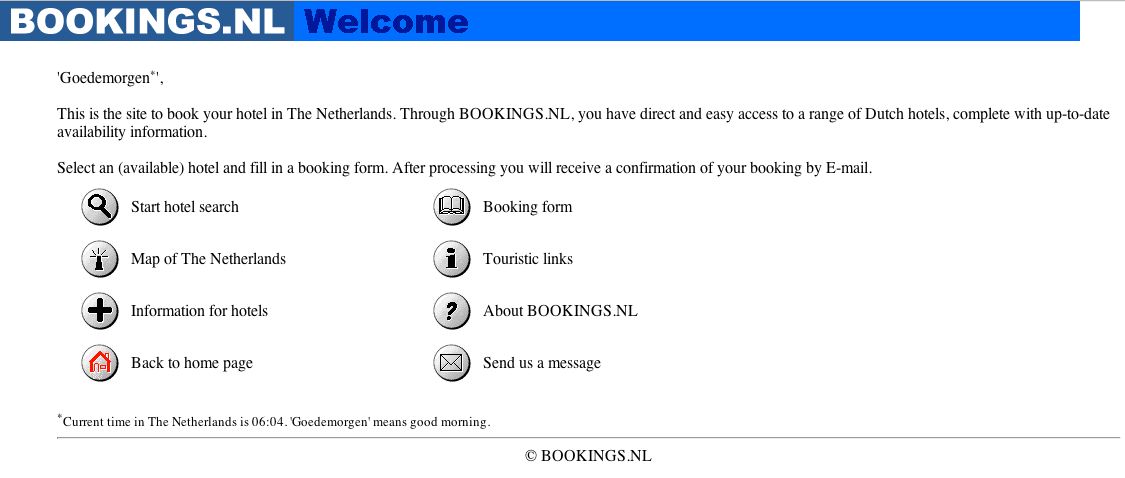
Source: Web Design Museum - One of the earliest versions of Bookings.nl.
An important part of Booking’s early success was its agent model. Unlike many U.S. competitors, travelers could book online but pay directly at the hotel. The hotel then paid Booking a commission for the reservation. This made online booking easier for travelers and helped Booking attract thousands of independent European hotels.
In 2000, Bookings.nl merged with another Dutch company called Bookings Online and became Booking.com.
Another important growth driver was Google. Around 2003, Booking started using Google AdWords on a large scale to reach people searching for hotels online. This helped Booking grow across Europe.
Booking.com was growing fast, but the company also had cash flow challenges. In 2005, U.S. online travel company Priceline acquired Booking.com for $133 million and later combined it with British hotel platform Active Hotels under the Booking.com brand. The deal became one of the most successful acquisitions in internet history. Booking.com grew across Europe and later around the world, becoming the most important source of growth and profit for its U.S. parent company.
The group continued to expand, buying Agoda in 2007, TravelJigsaw in 2010, which later became Rentalcars.com, KAYAK in 2013, and OpenTable in 2014. Booking.com also moved beyond hotels, adding apartments, vacation homes, flights, rental cars and attractions.
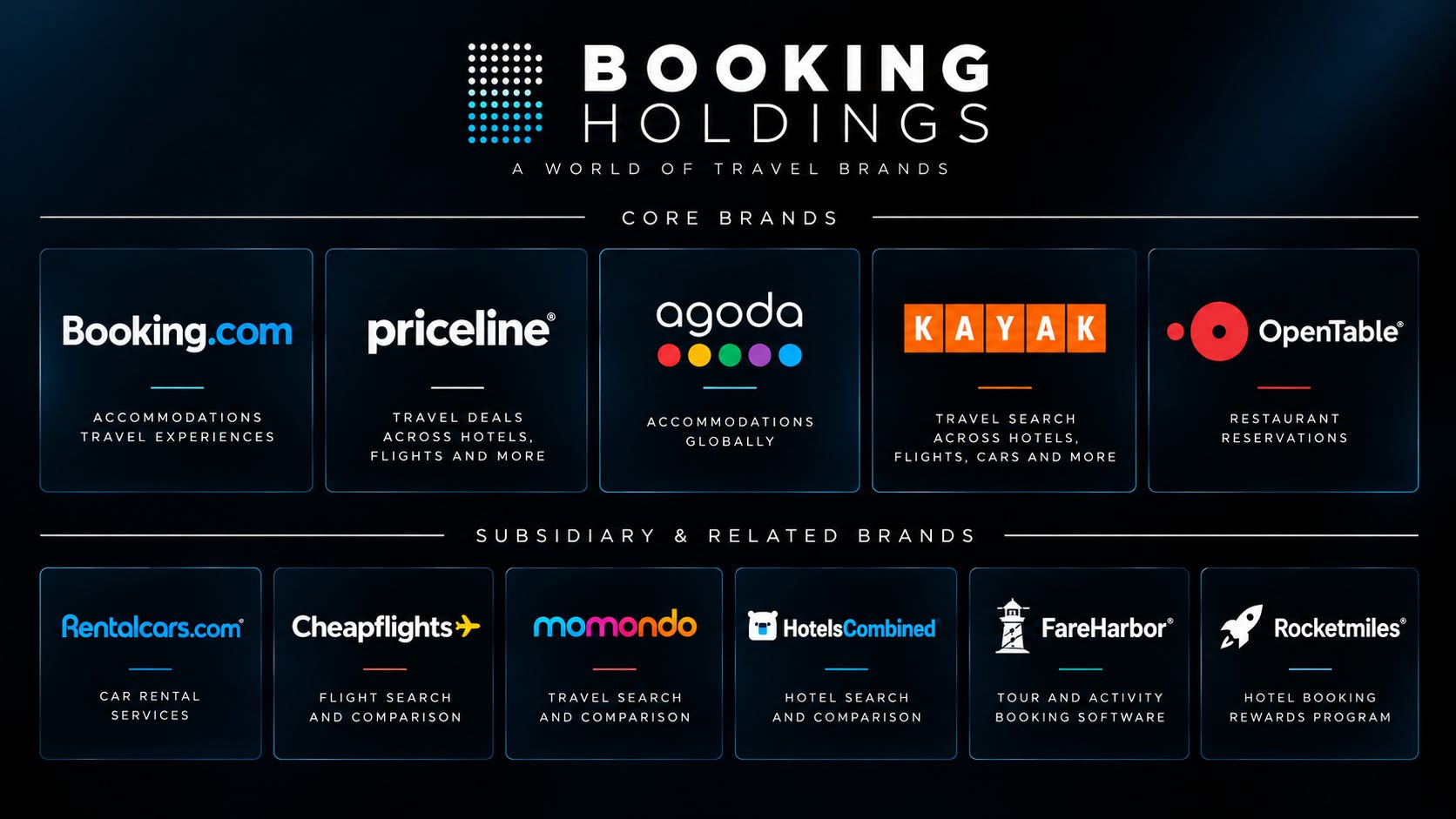
Source: Booking Holdings Corporate Website — Brands.
By 2018, Booking.com had become so important that The Priceline Group changed its name to Booking Holdings and its Nasdaq ticker from PCLN to BKNG.
In 2020, Booking went through its biggest crisis when the COVID-19 pandemic brought global travel almost to a standstill. Bookings fell significantly, but the business recovered strongly as travel returned.
Today, Booking Holdings is one of the world’s largest online travel companies. Its long-term strategy is called the “Connected Trip”: bringing accommodations, flights, rental cars, attractions and other parts of a trip together in one place. AI is becoming an important part of this strategy.
Its official mission is:
“To make it easier for everyone to experience the world.”
Business Model Explained
Booking Holdings helps people find, compare, and book travel services worldwide. Through brands such as Booking.com, Priceline, Agoda, KAYAK, and OpenTable, the company connects travelers with hotels, vacation rentals, airlines, rental car companies, and restaurants. Accommodation bookings are its largest business, but Booking wants customers to organize their entire trip through its platforms.
At the center of its business are three activities:
🏨 1. Accommodation & Travel Bookings
Booking.com, Agoda, and Priceline allow travelers to book hotels, vacation rentals, flights, rental cars, and other travel services.
Accommodation is Booking's largest business, connecting travelers with hotels and vacation rentals around the world.
💳 2. Agency & Merchant Models
Booking earns money from travel bookings in two ways:
Agency Model: Travelers typically pay the accommodation directly, and Booking earns a commission from the provider.
Merchant Model: Booking handles the customer’s payment, pays the travel provider, and keeps its agreed share.
The merchant model also makes it easier to offer flexible payments, package deals, and additional travel services.
🔎 3. Travel Search & Restaurant Reservations
Through KAYAK, momondo, Cheapflights, and HotelsCombined, travelers can compare prices across travel providers. These platforms earn revenue from advertising and referrals.
OpenTable helps customers discover and reserve restaurants, generating revenue from restaurant software, subscriptions, and reservation fees.
How Booking Holdings Makes Money 💰
Booking generates revenue through four sources:
🏨 Booking Commissions: Fees from accommodation and other travel reservations.
💳 Merchant Bookings: Revenue from bookings where Booking handles customer payments.
📢 Advertising & Referrals: Fees from advertising and directing customers to travel providers
🍽️ Restaurant Services: Revenue from OpenTable’s reservations and restaurant software.
Booking benefits from a large network of travelers and accommodation providers. More properties attract more customers, and more customers encourage additional properties to join.
Its asset-light business model allows Booking to grow without owning hotels or airplanes. Through its Connected Trip strategy, the company is also bringing more travel services together, giving customers more reasons to return and book directly through its platforms.
Revenue Breakdown
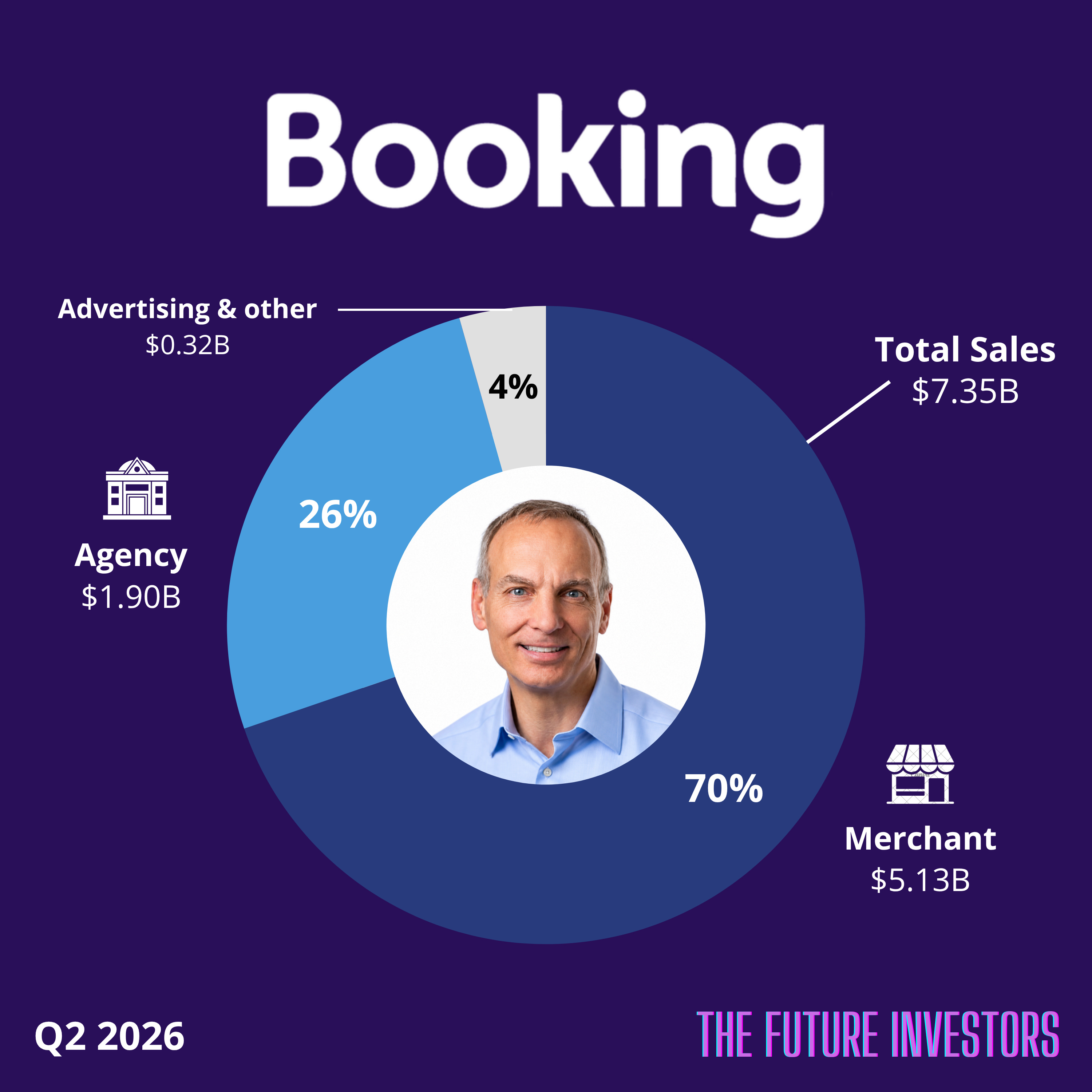
On August 4, 2026, Booking Holdings reported its Q2 2026 results. Total revenue reached $7.35 billion (+8% YoY), supported by continued travel demand. The company recorded 325 million room nights (+5% YoY) and $51.0 billion in gross bookings (+9% YoY).
Booking reports its revenue across three categories:
💳 Merchant – $5.13 billion (70%)
Booking’s largest revenue source, coming from reservations where customers pay directly through Booking’s platforms. Merchant revenue increased 15% YoY, as more travelers booked accommodation through this model.
🏨 Agency – $1.90 billion (26%)
Revenue from bookings where travelers typically pay the accommodation provider directly, and Booking receives a commission. Agency revenue declined 7% YoY, as more bookings moved to the merchant model.
📢 Advertising & Other – $322 million (4%)
Revenue from advertising, travel referrals, restaurant services, and other activities. This category grew 8% YoY.
The merchant model now accounts for around 70% of Booking’s total revenue. This means more customers pay directly through Booking’s platforms, making it easier for the company to offer additional travel services and earn more from each booking.
Recent Developments
Booking Holdings has made important changes to its business over the past year. AI, new advertising opportunities, cost savings, European regulations, and leadership changes are all playing a role in the company's future.
Here are the key developments:
1️⃣ AI & Connected Trip Strategy
Booking is investing more in AI to make travel planning and booking easier. Booking.com has introduced its AI Trip Planner, Priceline offers its AI assistant Penny, and OpenTable has developed an AI Concierge. In May 2026, Booking.com also introduced a way for travelers to search for rental cars through ChatGPT.
These developments are part of Booking’s Connected Trip strategy, which helps customers book hotels, flights, rental cars, attractions, and other travel services in one place. The goal is to make travel planning easier and encourage customers to book more services through Booking’s platforms. Booking is already seeing benefits from AI, including lower customer service costs per booking.
2️⃣ New European Rules for Booking.com
Booking.com is subject to the EU’s Digital Markets Act (DMA), which sets new rules for large online platforms. Hotels now have more freedom to offer lower prices or better deals through their own websites and other booking platforms. In September 2026, Booking made further changes to its hotel partner programs and pricing rules. These rules could increase competition and put pressure on Booking’s commissions in Europe.
3️⃣ Etraveli Acquisition Blocked, Partnership Extended
Booking planned to acquire flight booking company Etraveli for €1.63 billion, but European regulators blocked the deal over competition concerns. In September 2026, an EU court confirmed that decision. Booking and Etraveli extended their existing partnership for another eight years in June 2025. This means Booking can continue offering flights through its platforms without owning Etraveli. Flights are an important part of Booking’s Connected Trip strategy.
4️⃣ Launch of BKNG Ads
In May 2026, Booking introduced BKNG Ads, bringing advertising opportunities across its travel brands into one business. Hotels, airlines, and other travel companies can use Booking’s platforms to reach customers who are already searching for trips and accommodation. This gives Booking another way to grow advertising revenue, in addition to the money it earns from travel bookings.
5️⃣ Transformation Program & Cost Savings
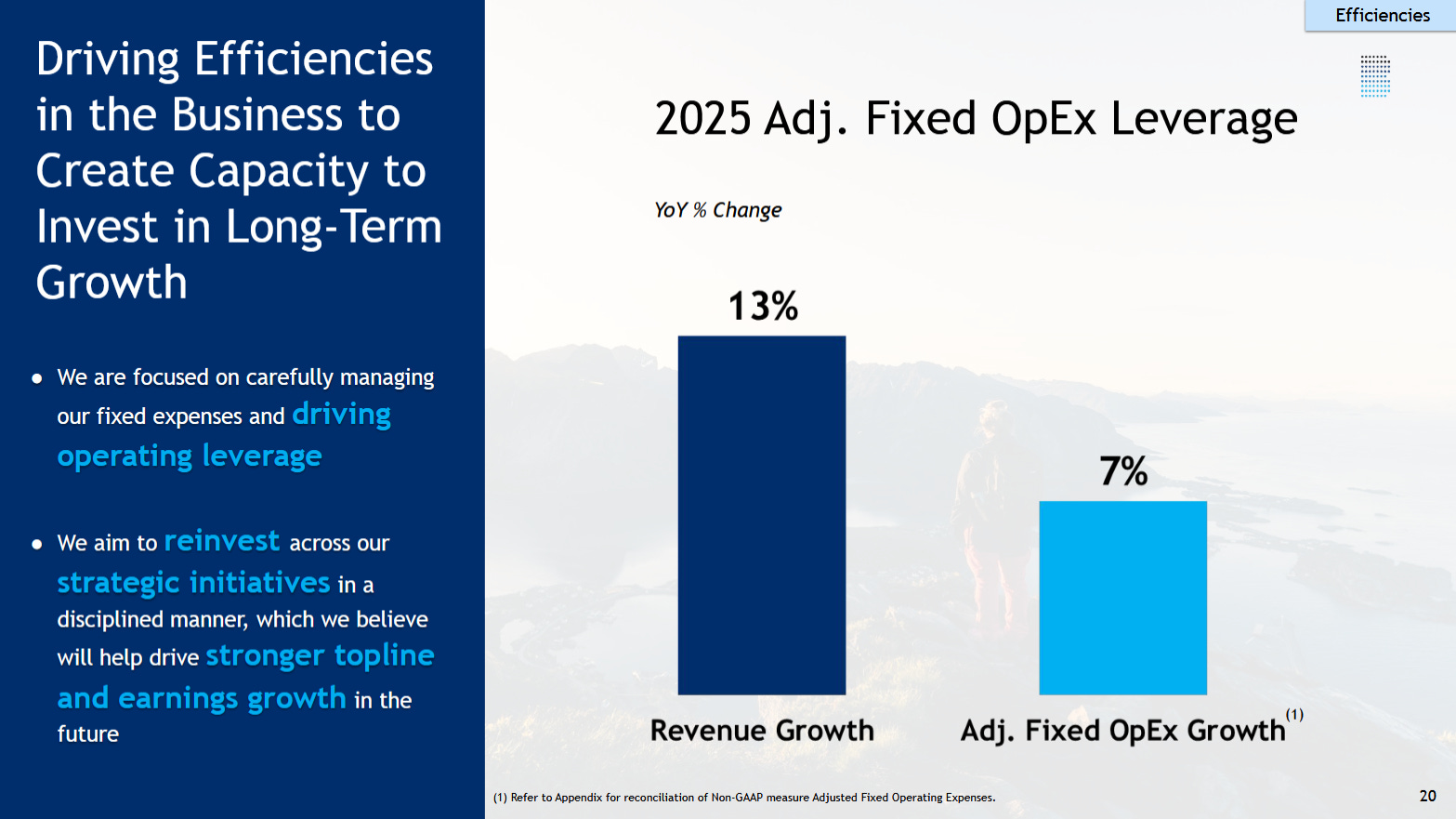
Booking has been working on a Transformation Program to reduce costs and make its business more efficient. The company expects the program to deliver around $650 million in annual cost savings by the end of 2027. Booking has also kept its fixed operating costs under control. In 2025, revenue grew 13%, compared to 7% growth in adjusted fixed operating expenses. The goal is to improve profit margins and free up more money for investments in AI, technology, and future growth.
Source: Booking Holdings Investor Presentation August 2026
6️⃣ New FTC Investigation in the United States
In October 2026, Reuters reported that the U.S. Federal Trade Commission (FTC) was preparing possible legal action against Booking Holdings. The investigation concerns potentially misleading hotel advertisements and unexpected fees linked to a third-party booking website. According to the report, Booking could face more than $500 million in potential penalties. No final decision has been announced, but the investigation creates another legal risk for the company.
7️⃣ Leadership Changes at KAYAK and Priceline
Booking has also made changes to the leadership of two of its travel brands. In January 2026, Brigit Zimmerman became CEO of Priceline, replacing Brett Keller after his retirement. Zimmerman previously served as Priceline’s Chief Commercial Officer.
In February 2026, Peer Bueller became CEO of KAYAK, replacing co-founder Steve Hafner. Hafner became Executive Chair at KAYAK and took on a new role at Booking Holdings focused on AI innovation.
🔥 Upgrade Now and Save 30%!
Get instant access to this Booking Full Deep Dive, all 15+ Deep Dives, our Portfolios & Transactions, our monthly Best Buys, 95+ Stock Battles — plus 425+ premium articles!
✅ Trusted by 4,800+ investors.
Fundamental Analysis
Now it’s time for the fundamental analysis of Booking.
In this section, we evaluate three key areas: management, market, and financials & growth estimates. Each area contains multiple elements and each element is scored individually, leading to a final score between 0 and 100.
Final Scoring
This score reflects how fundamentally attractive we believe Booking is as an investment, ranging from:
🔴 Below 50 → Uninvestable
🟠 50 - 59 → Questionable
🟡 60 - 69 → Reasonable
🟢 70 - 79 → Quality
🔵 80 - 89 → High-Quality
🟣 90 or above → Exceptional
Unlock our scoring framework and full fundamental analysis below, and see how we score Booking on a scale from 0 to 100 — exclusively available to our paid members! ✨
First, let’s walk through our scoring framework 📊👇