


Welcome to the 13th edition of Unpacked, our monthly series where we take a deep dive into a company. This time, we’re taking a closer look at SanDisk — one of the world’s leading NAND flash and storage companies, powering AI datacenters, cloud infrastructure, PCs, smartphones, and enterprise systems worldwide.
We break down its story, business model, and highlight the latest developments.
Additionally, we do a detailed fundamental analysis, diving into the company’s management, market, financials, and growth estimates. We score each area separately, leading to a final score between 0 and 100. This score reflects how fundamentally attractive we believe the company is as an investment, ranging from:
🔴 Below 50 → Uninvestable
🟠 50 - 59 → Questionable
🟡 60 - 69 → Reasonable
🟢 70 - 79 → Quality
🔵 80 - 89 → High-Quality
🟣 90 or above → Exceptional
The goal? To give you a full deep dive into this company, as a complement to your own research, so you can decide if it’s the right investment for you.
In case you missed it, here you can read the previous editions of Unpacked:
Now let’s unpack the fundamentals of SanDisk and see how we score it!
History and Business Model
The story of SanDisk started in 1988, when Eli Harari, Sanjay Mehrotra (now CEO of Micron), and Jack Yuan founded the company in California under the name SunDisk.
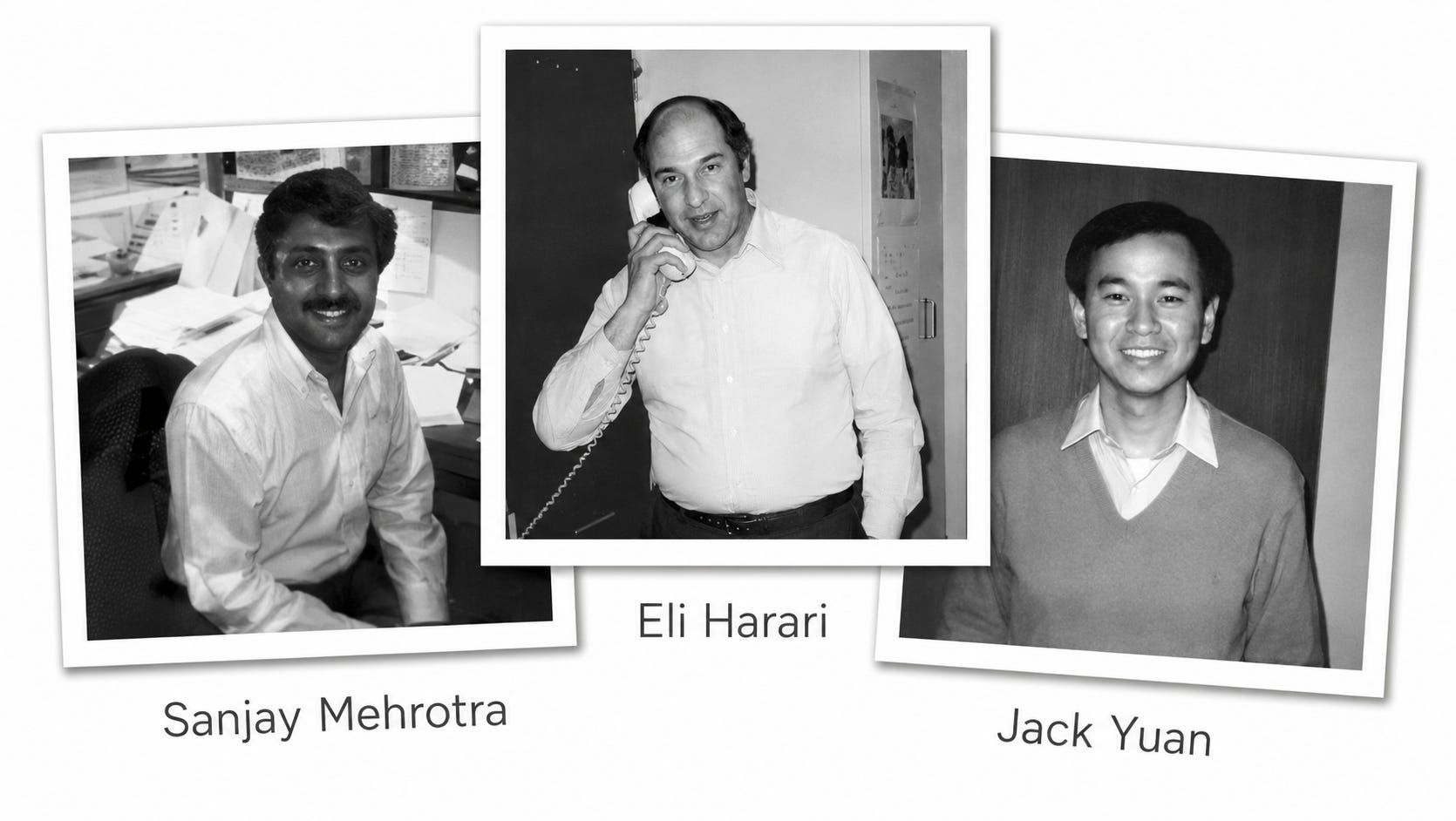
Source: Business Insider - The Founding Story of SanDisk
Their goal was ambitious: replace traditional hard disk drives (HDDs) with flash memory that could store data faster, more efficiently, and without moving parts.
As the company prepared to go public, it changed its name from SunDisk to SanDisk in late 1995 to avoid confusion with Sun Microsystems. Later that same year, SanDisk went public on the NASDAQ under the ticker symbol SNDK, helping accelerate the development of flash memory technology.
A major breakthrough came in 2000, when SanDisk partnered with Toshiba to scale NAND flash memory production.
As smartphones, laptops, digital cameras, and gaming devices became more popular, demand for flash storage exploded. SanDisk became widely known for products such as SD cards, microSD cards, USB flash drives, and SSDs.
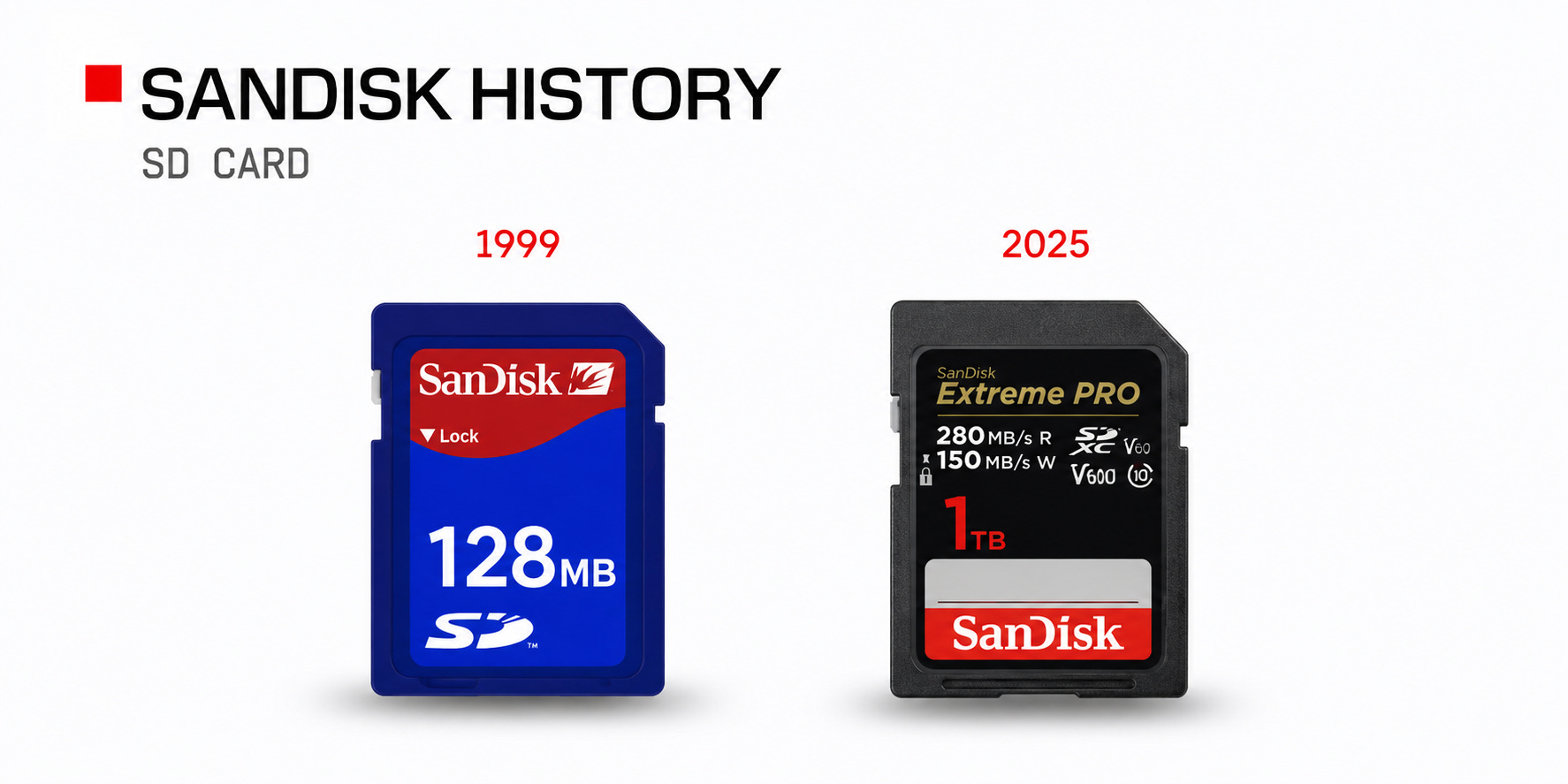
Source: SanDisk investor material, adapted by ChatGPT
Over time, the company expanded beyond consumer memory cards and became a broader storage company serving consumers, enterprises, and data centers.
One of the biggest moments came in 2016, when Western Digital acquired SanDisk for $19 billion, combining Western Digital’s HDD business with SanDisk’s flash memory expertise. In February 2025, SanDisk officially completed its spin-off from Western Digital and returned to the NASDAQ under the ticker symbol SNDK.
Today, SanDisk focuses on NAND flash storage solutions used in smartphones, PCs, data centers, gaming devices, automotive systems, and AI infrastructure.
Its mission reflects this focus:
“Delivering innovative flash and memory solutions that keep people and businesses moving forward.”
Business Model Explained
SanDisk operates in the global NAND flash memory market and develops storage solutions used in consumer devices, edge systems, and data centers.
In simple terms, the company helps devices and systems store data faster, more efficiently, and with lower power consumption than traditional hard disk drives
Its business is built around three core end markets:
📱 1. Consumer
SanDisk sells products such as SD cards, microSD cards, USB flash drives, and portable SSDs used in smartphones, cameras, gaming devices, and laptops.
🌐 2. Edge
The company also provides flash storage for cars, industrial systems, PCs, and connected devices that continuously generate and process data closer to the user.
🏢 3. Data Center
SanDisk supplies high-performance storage solutions for cloud providers and AI workloads. The rapid growth of AI and cloud computing is increasing demand for fast and energy-efficient storage.
How SanDisk makes money 💰
SanDisk earns money by selling NAND flash memory and storage products to consumers, device makers, businesses, and cloud companies.
Revenue depends on:
Demand for smartphones, PCs, and data centers
Growth in AI infrastructure
NAND memory prices
More storage needed per device
One important thing about the business is that the NAND market is cyclical. When there is too much supply, prices and profits can fall quickly. When demand picks up again, profitability often recovers fast as well.
Over the long term, SanDisk benefits from one major trend: the world keeps creating more data through AI, cloud computing, gaming, video, and connected devices.
Revenue Breakdown
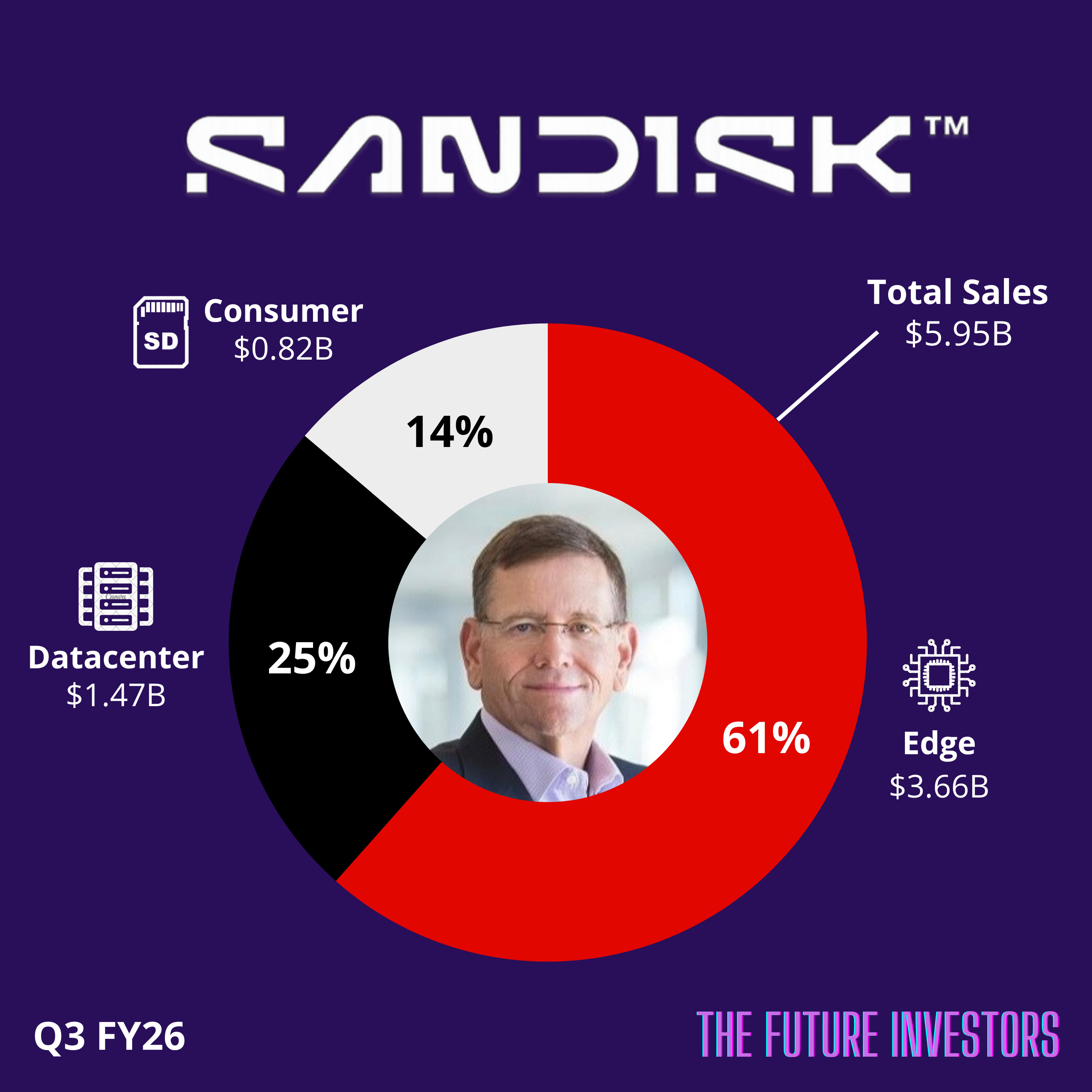
On April 30, 2026, SanDisk reported its fiscal Q3 2026 results. Total revenue came in at $5.95 billion (+251% YoY).
🌐 Edge – $3.66 billion (61%)
The largest part of the business, supported by demand from PCs, automotive, and industrial markets.
🏢 Data Center – $1.47 billion (25%)
The fastest-growing segment, benefiting from rising AI and cloud infrastructure demand.
📱 Consumer – $0.82 billion (14%)
Driven by consumer storage products, although growth is slower than in AI-related markets.
Recent Developments
SanDisk is going through one of the biggest transitions in its history, shifting from a traditional consumer storage company into a more AI- and data-center-focused storage player. Here are the key recent developments:
1️⃣ Spin-Off from Western Digital
In February 2025, SanDisk officially completed its spin-off from Western Digital and returned to the NASDAQ under the ticker symbol SNDK.
David Goeckeler became CEO of the independent SanDisk, with the company now fully focused on NAND flash memory and SSDs. SanDisk also started transitioning several WD-branded flash and SSD products back under the SanDisk name.
2️⃣ AI Push with High Bandwidth Flash
In 2025, SanDisk partnered with SK hynix to develop High Bandwidth Flash (HBF), a new NAND-based memory technology designed for AI inference workloads. The goal is to deliver:
Higher storage capacity
Lower power consumption
Lower AI infrastructure costs
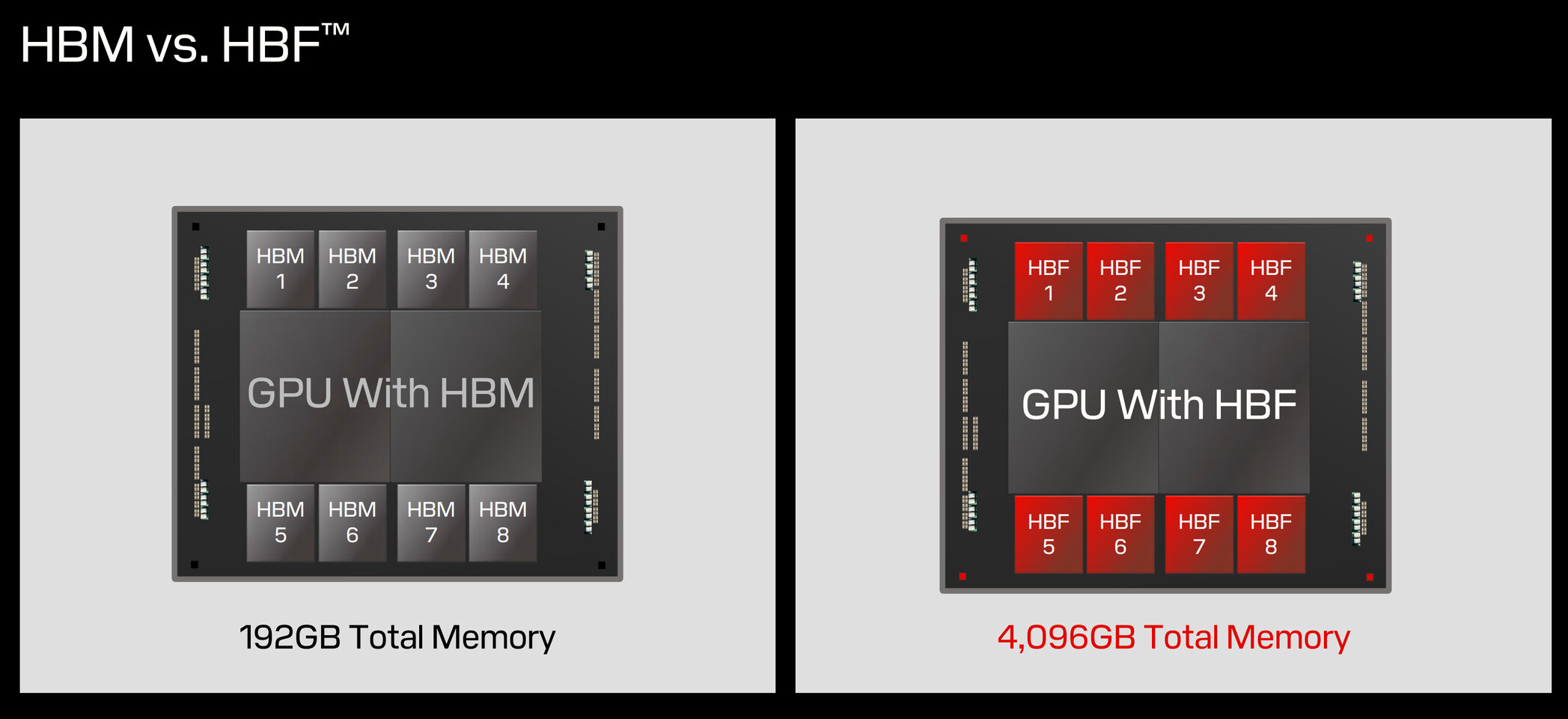
Source: SanDisk HBF Factsheet
In February 2026, both companies launched an initiative through the Open Compute Project to standardize HBF technology for future AI systems. First HBF samples are expected in the second half of 2026.
3️⃣ New BiCS9 NAND Technology & Kioxia Partnership
SanDisk continues working closely with Kioxia on next-generation BiCS 3D NAND technology.
In 2025, the companies started shipping BiCS9 samples for enterprise SSDs and AI workloads, improving speed, storage density, and power efficiency. At the same time, both companies extended their Yokkaichi joint venture agreement through 2034, strengthening one of the world’s largest NAND flash partnerships.
4️⃣ Massive Stock Surge & AI Momentum
Since returning to the stock market in February 2025, SanDisk has become one of the fastest-rising stocks in the market.
The stock surged more than 4,000% last year, pushing SanDisk’s market capitalization to $235 billion.
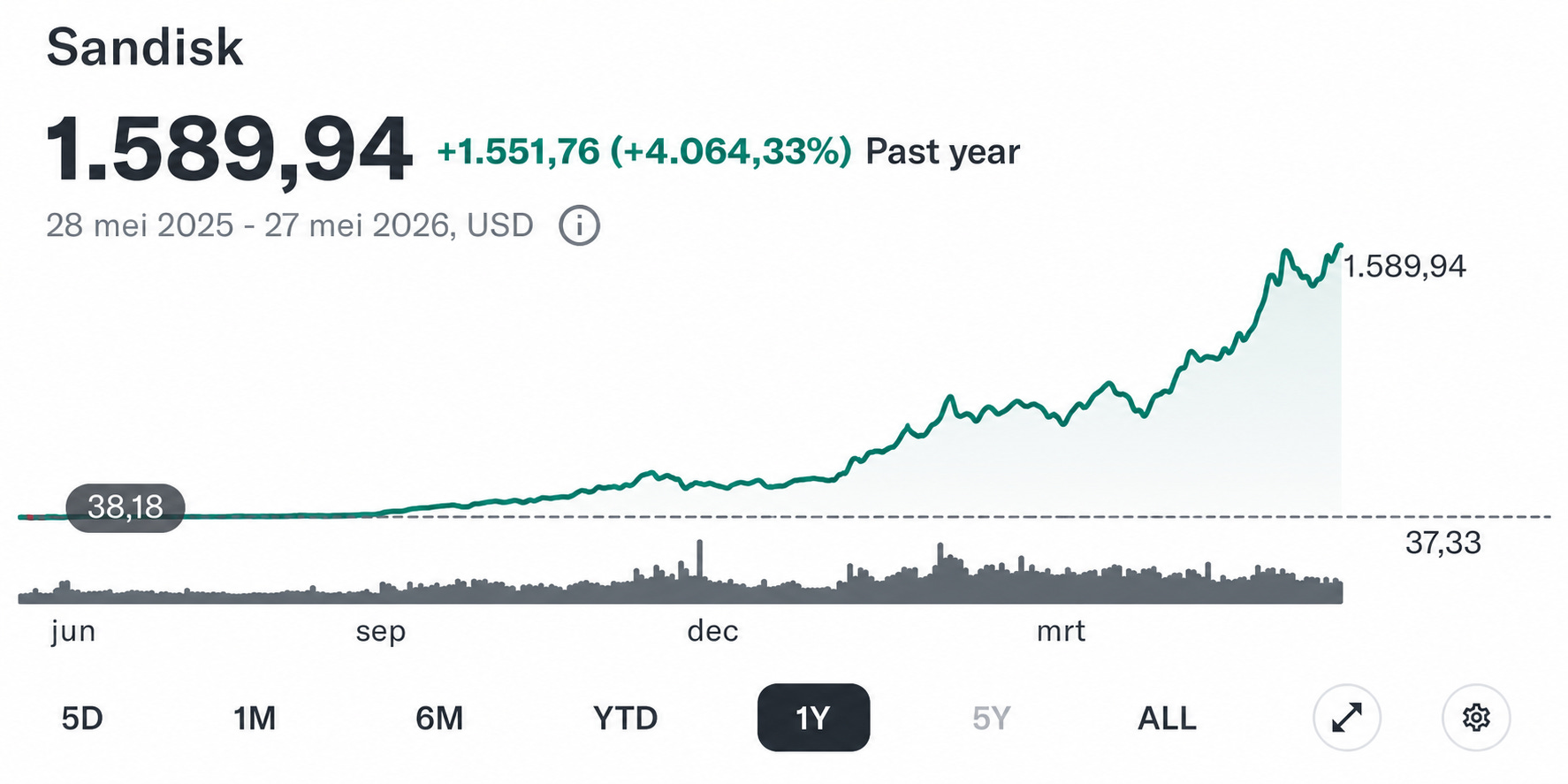
Source: Yahoo Finance - SanDisk stock performance
Here’s why the stock has been rallying:
Strong AI infrastructure demand
Rising NAND memory prices
Growing demand for enterprise SSDs
Increasing hyperscaler AI spending
Excitement around High Bandwidth Flash
Investors increasingly see SanDisk as a major beneficiary of the long-term growth in AI data infrastructure.
🔥 Upgrade Now and Save 30%!
Get instant access to this SanDiskFull Deep Dive, all other Deep Dives, our Portfolios & Transactions, our monthly Best Buys, 95+ Stock Battles — plus 400+ premium articles!
✅ Already trusted by 4,700+ investors.
Fundamental Analysis
Now it’s time for the fundamental analysis of SanDisk.
In this section, we evaluate three key areas: management, market, and financials & growth estimates. Each area contains multiple elements and each element is scored individually, leading to a final score between 0 and 100.
Final Scoring
This score reflects how fundamentally attractive we believe SanDisk is as an investment, ranging from:
🔴 Below 50 → Uninvestable
🟠 50 - 59 → Questionable
🟡 60 - 69 → Reasonable
🟢 70 - 79 → Quality
🔵 80 - 89 → High-Quality
🟣 90 or above → Exceptional
Unlock our scoring framework and full fundamental analysis below, and see how we score SanDisk on a scale from 0 to 100 — exclusively available to our paid members! ✨
First, let’s walk through our scoring framework 📊👇